
Prenatal Pelvic Floor Therapy for Birth Prep in Southern Maine
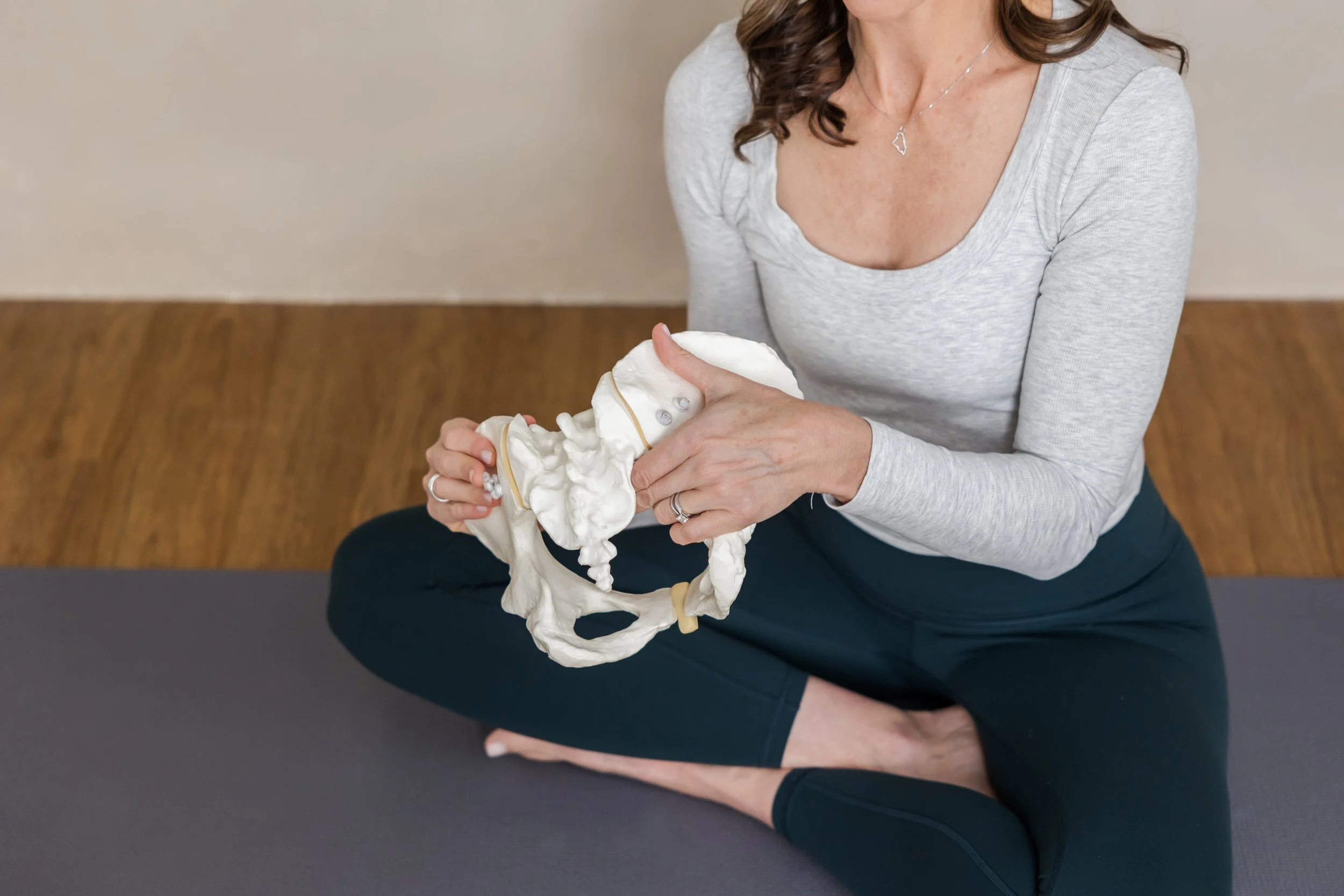
Using pelvis anatomy to educate expecting parents on labor, delivery, and pelvic floor function during prenatal pelvic floor therapy in Scarborough, Maine.
Why Pelvic Floor Therapy Matters Before, During, and After Birth
Pregnancy is a time of profound physical change and yet many birthing people are rarely told how much preparing their body for labor and delivery can influence their birth experience and postpartum recovery.
At Root To Rise Physical Therapy & Pelvic Health, we provide prenatal pelvic floor therapy in Scarborough and Bath, Maine, offering proactive, individualized care that supports your body during pregnancy, prepares you for labor and delivery, and sets the foundation for long-term postpartum recovery.
Pelvic floor therapy is not just for after birth. In fact, some of its greatest benefits occur before labor even begins.
A Common Misconception: Pelvic Floor Therapy Is Only for After Delivery
Many people assume pelvic floor physical therapy is only needed postpartum and once symptoms like leaking, pain, or core weakness appear. While postpartum care is incredibly important, this belief overlooks a critical truth:
👉 How your body moves and functions during pregnancy and birth directly impacts postpartum recovery.
Prenatal pelvic floor therapy allows us to:
Address mobility and coordination before labor
Improve pushing efficiency
Reduce unnecessary pelvic floor strain
Support smoother recovery after delivery
Rather than reacting to symptoms after birth, we take a proactive approach that supports both birth outcomes and long-term pelvic health.
Why Pelvic Floor Therapy Should Be Standard Care During Pregnancy & Postpartum
Despite its benefits, there is still not enough awareness about pelvic floor therapy during pregnancy and after childbirth. Many birthing people are told symptoms like leaking, pelvic pain, pressure, or discomfort are “normal” and that they should simply wait.
At Root To Rise, we believe pelvic floor therapy should be:
Standard care for all birthing people
A routine referral from OBs, midwives, and birth providers
Part of a comprehensive, whole-person approach to pregnancy and postpartum health
Early support leads to better outcomes for birth and recovery.
Our Clinical Philosophy & Founding Principles
Root To Rise Physical Therapy & Pelvic Health was founded on the belief that birthing bodies deserve better preparation, education, and recovery support.
Our clinical philosophy is rooted in:
Treating the whole person, not just symptoms
Empowering patients with education and body awareness
Supporting mobility, adaptability, and coordination — not fear or restriction
Providing proactive care before dysfunction becomes chronic
We blend pelvic health physical therapy with breathwork, mindful movement, and individualized education to support confident, informed birth experiences.
What We Address in Prenatal Pelvic Floor Therapy
Optimizing Mobility for Labor & Delivery
Labor requires movement and adaptability. We focus on improving mobility of:
Hips (Internal & External Rotation)
Hip mobility directly influences pelvic opening, labor positioning, and comfort during contractions.
Sacrum & Coccyx
These structures need to move backward during labor to allow space for baby to descend. Restrictions here can impact pushing efficiency and comfort.
Uterine Ligaments & Abdominal Fascia
We address fascial and ligament mobility to reduce discomfort, improve core connection, and support efficient movement during pregnancy and birth.
Pelvic Floor Muscles
A healthy pelvic floor for birth is not just strong, it must be able to lengthen, relax, and respond.
Improving Coordination: Breath, Pelvic Floor & Pushing
Birth is a coordinated, full-body process.
Breath & Pelvic Floor Connection
We teach how breathing influences pelvic floor movement, pressure management, and efficiency during contractions.
Personalized Pushing Strategies (Stage 2 of Labor)
There is no one-size-fits-all approach. We help you explore:
Different pushing techniques
Positions that support pelvic opening
Strategies that reduce strain and support efficiency
This preparation is especially valuable for the pushing phase of labor.
Pelvic Floor Therapy Can Help During Pregnancy — No Need to Wait
Pelvic floor physical therapy can successfully improve and often eliminate symptoms during pregnancy, including:
Bladder leakage
Bowel symptoms
Pelvic, hip, or low back pain
Pain with intercourse
Core weakness or feelings of pressure
Pregnancy does not require suffering. Many symptoms are treatable with the right support.
How Prenatal Care Optimizes Postpartum Recovery
The way your body moves during pregnancy and labor directly influences how you recover after birth. Prenatal pelvic floor therapy helps:
Reduce excessive pelvic floor strain during delivery
Support more efficient tissue healing
Improve core and pelvic floor recovery
Optimize return to exercise and daily activities
Our goal is not just short-term recovery but long-term pelvic and musculoskeletal health.
Serving Scarborough & Greater Portland, Maine
Root To Rise Physical Therapy & Pelvic Health proudly serves Scarborough, Portland, South Portland, Cape Elizabeth, Falmouth, Bath and surrounding Maine communities, supporting birthing people through pregnancy, birth, and postpartum recovery.
Schedule Prenatal Pelvic Floor Therapy in Scarborough, Maine
If you’re pregnant and looking for prenatal pelvic floor therapy, we’d love to support you.
✨ Book a pelvic health evaluation at Root To Rise Physical Therapy & Pelvic Health in Scarborough, Maine.