
5 Pelvic Floor Myths We Hear All the Time (and the Truth)
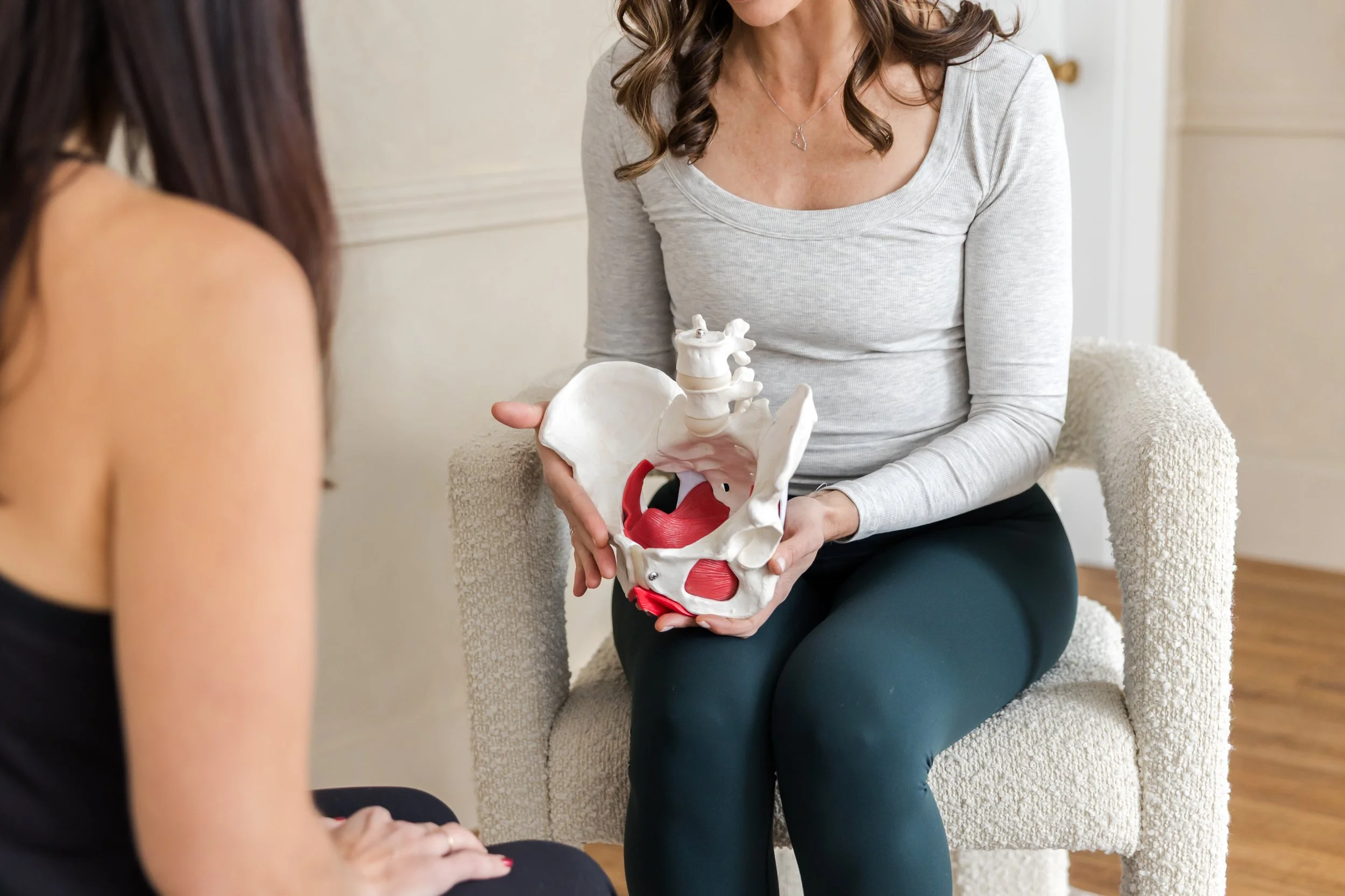
Pelvic floor physical therapist providing pelvic health education at Root To Rise in Scarborough, Maine.
With increased access to online health information, awareness of pelvic floor physical therapy has grown, but so has confusion. As pelvic floor physical therapists serving Scarborough and Bath, Maine, we hear the same myths over and over, often from people who delay care because they’re unsure what pelvic floor therapy actually treats.
Below, we break down some of the most common pelvic floor myths we hear in our clinics, so you can feel confident seeking care that truly supports your body and goals.
Myth: Pelvic floor therapy is only helpful postpartum.
Fact: Pelvic floor therapy can help people at any stage of life—pregnant or not.
While pelvic floor physical therapy is well known for postpartum recovery, it’s also highly effective for addressing urinary issues, bowel dysfunction, pelvic pain, sexual discomfort, and core instability, whether or not pregnancy is part of the picture.
People in Scarborough, Bath, and surrounding Maine communities often seek pelvic floor therapy for concerns that have nothing to do with childbirth. These symptoms can also be treated during pregnancy, helping improve comfort, mobility, and confidence leading into delivery.
In fact, pelvic floor therapy doesn’t have to wait until after birth. Prenatal care may include:
Breathing strategies
Posture and movement support
Pushing mechanics education
Preparation for postpartum healing
Starting early can make a meaningful difference in recovery.
Myth: Kegels are always the solution.
Fact: Pelvic floor therapy is individualized and Kegels aren’t always appropriate.
Kegels (pelvic floor muscle contractions) are often the first thing people try, but they’re not a one-size-fits-all solution. Many pelvic floor symptoms are caused by muscle tension, poor coordination, or inefficient movement patterns, not weakness.
As pelvic floor physical therapists in Maine, we assess how your pelvic floor muscles function, not just how strong they are.
Treatment may include:
Relaxation and down-training techniques
Functional strengthening during real-life movements
Core and hip integration
Breathwork and posture retraining
When strengthening is needed, it rarely relies on Kegels alone.
Myth: Pelvic floor therapy is only for women.
Fact: Everyone has a pelvic floor.
The pelvic floor muscles support the bladder, bowels, and reproductive organs, contribute to sexual health, and play a key role in core stability. While anatomy differs, pelvic floor dysfunction affects people of all genders.
We regularly work with individuals in Scarborough and Bath experiencing:
Urinary or bowel changes
Pelvic or groin pain
Core weakness
Hip or low back pain
Post-surgical recovery
Pelvic floor physical therapy is for anyone with a pelvis and symptoms don’t have to be severe to benefit from care.
Myth: If there’s no pelvic pain or bladder symptoms, the pelvic floor can’t be involved in back or hip pain.
Fact: The pelvic floor is a key part of the core system and often contributes to unresolved back or hip pain.
The pelvic floor works together with the diaphragm, deep abdominals, and hips to support spinal stability. Dysfunction in this system can contribute to persistent low back or hip pain, even when imaging looks “normal.”
Many people who haven’t found relief with traditional orthopedic physical therapy see improvement when pelvic floor physical therapy is added to their care plan and especially when pain keeps returning or feels hard to explain.
Myth: Pelvic floor therapy only helps if you start a few months postpartum.
Fact: Pelvic floor therapy can be beneficial months (or even years) after childbirth.
While early postpartum care can be incredibly helpful, it’s never “too late” to start pelvic floor physical therapy. People often see meaningful improvements years after delivery, especially when symptoms were normalized or ignored.
Pelvic floor therapy supports:
Long-term strength and mobility
Symptom relief
Improved confidence with exercise and daily activities
Sustainable pelvic and core function at any age
Ready to Get Support?
If you’re experiencing symptoms, or simply want to better understand how your body works, pelvic floor physical therapy can help. We offer personalized, whole-body pelvic floor care in Scarborough and Bath, Maine, meeting you where you are and guiding you toward lasting change.
👉 Schedule an appointment or learn more about pelvic floor physical therapy near you.