
How to Fix Vaginal Prolapse: A Gentle, Whole-Body Approach to Healing
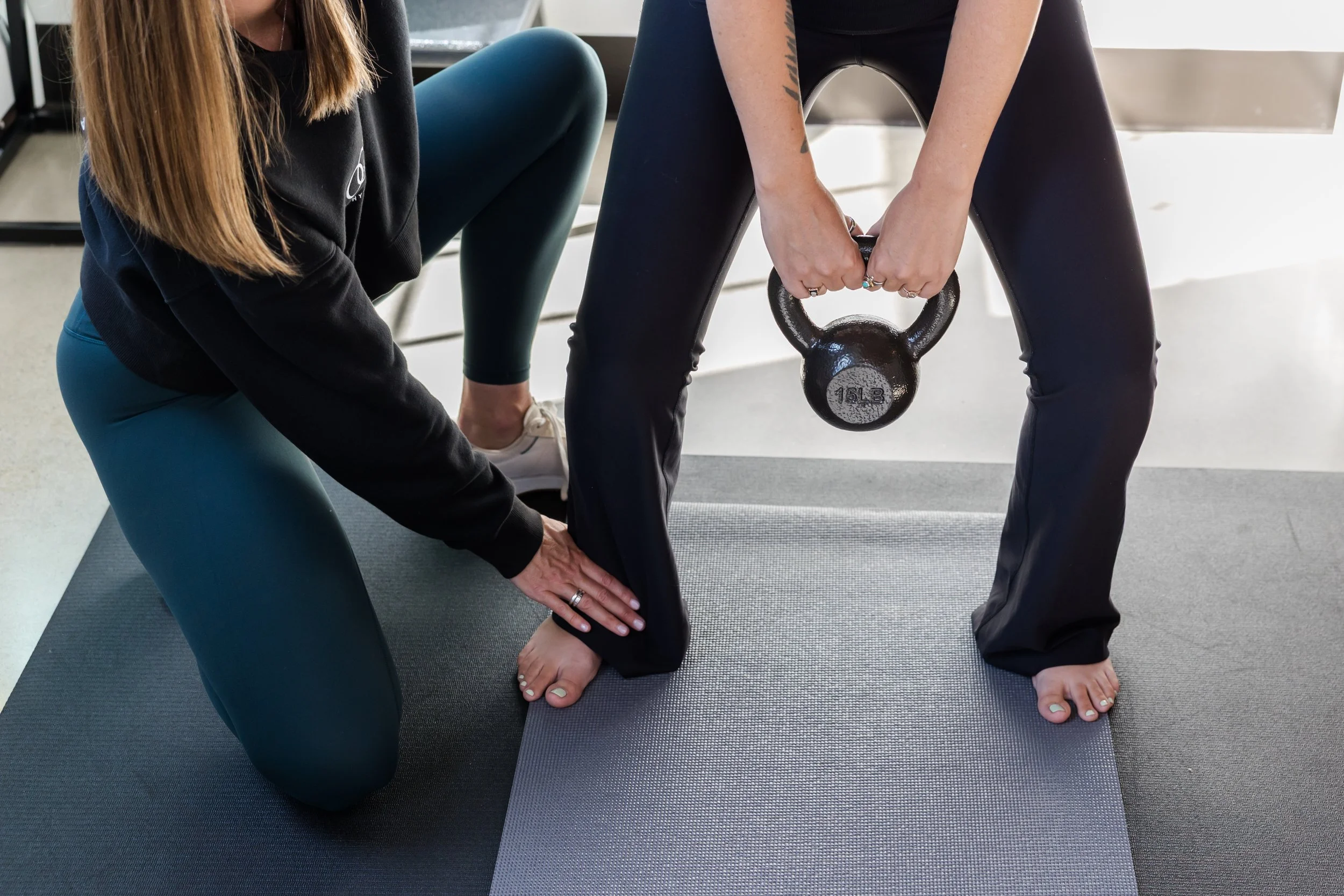
Dr. Jenn Gelfand instructing a patient on functional kettlebell squats in Scarborough, Maine
If you’ve recently been told you have a vaginal prolapse or you’ve started noticing symptoms like heaviness, pressure, bulging, or the feeling that “something just feels off” down there, you are not alone. Despite what many people are told, this is not simply something you have to “live with” and you don’t have to stop working out, lifting heavy, or whatever it is that brings you joy.
At Root To Rise, we work with so many people navigating prolapse during postpartum recovery, perimenopause, and beyond and our main goal is to support them in getting back to doing all the things they love to do. Vaginal prolapse can often improve significantly with the right support, movement strategies, and pelvic floor care.
What Is Vaginal Prolapse?
Vaginal prolapse (also called pelvic organ prolapse or POP) happens when the connective tissues and muscles supporting the pelvic organs become weakened or dysfunctional allowing one or more organs to descend into the vaginal canal. This can involve:
The bladder (cystocele)
Rectum (rectocele)
Uterus (uterine prolapse)
Or the top of the vaginal canal (vaginal cuff) after hysterectomy
Prolapse exists on a spectrum, and symptoms can vary widely from person to person. Some people with prolapse experience:
A feeling of heaviness or pressure in the vagina, rectum, or general pelvic region
Bulging or tissue at the vaginal opening
Difficulty fully emptying the bladder or bowels
Pelvic discomfort with exercise or standing
Low back or pelvic “aching” or pain
Symptoms that worsen later in the day or after prolonged upright activity
For many, symptoms can feel scary or discouraging but prolapse is very common, especially after pregnancy, childbirth, chronic straining, or hormonal shifts and there is help.
Can Vaginal Prolapse Be Fixed?
One of the biggest misconceptions about prolapse is that surgery is the only option. While surgery may be appropriate in some cases, many people with prolapse see significant improvement in symptoms through conservative care like pelvic floor physical therapy, pressure management, strengthening, and lifestyle modifications. The goal is not necessarily to “push everything back up,” but rather to:
Improve support and function
Reduce symptoms and pressure
Improve confidence with movement and exercise
Restore strength and coordination
Help you return to activities you love without symptoms
How Pelvic Floor Physical Therapy Helps Prolapse
At our Scarborough, Maine pelvic health clinic, prolapse treatment is never just about kegels. In fact, many of our patients with prolapse symptoms actually benefit more from learning how to coordinate pressure and relax tension rather than than simply squeezing harder and focusing soley on pelvic floor “strength”. We, as pelvic floor physical therapists, assess your entire body and function including:
Breathing mechanics
Core function
Posture and alignment
Hip and glute strength
Pressure management
Movement patterns
Pelvic floor coordination
Treatment may include:
Breath & Core Coordination
Your diaphragm, deep core, and pelvic floor all work together as a pressure system. Learning how to breathe well and manage pressure during movement can dramatically reduce prolapse symptoms.
Pelvic Floor Strengthening
Some people with POP do need strengthening but it should be individualized and functional, not just endless kegels.
Relaxation & Downtraining
Overactive or tense pelvic floor muscles can sometimes worsen symptoms. Learning how to relax and lengthen the pelvic floor is often just as important as strengthening.
Functional Movement Training
We help you safely return to:
Exercise
Lifting
Running
Yoga
Caring for children
Daily movement without fear
Lifestyle & Bowel Strategies
Constipation and chronic straining can also be major contributors to prolapse symptoms. Small changes in bowel habits, positioning, and daily movement can be a game changer when it comes to decreasing pressure on the pelvic organs and pelvic floor.
Vaginal Pessaries for Prolapse Support
Another conservative treatment option that can be incredibly helpful is a vaginal pessary.
A pessary is a soft, medical-grade silicone device inserted into the vagina to help support the pelvic organs and reduce symptoms of heaviness, pressure, or bulging. Think of it as an external support system for the pelvic floor while your body continues to build strength, coordination, and support. We often call it “like a sports bra for your pelvic organs”. We love combining pelvic floor therapy and pessary support! Pessaries can be especially beneficial for those with prolapse concerns who are:
Wanting to avoid or delay surgery
Postpartum (when tissues are usually. more vulnerable)
Returning to exercise or higher-impact activities
Individuals needing extra support during healing or strength-building
While the pessary provides symptom relief and support, Pelvic Floor Physical Therapy addresses the underlying pressure management, muscle coordination, strength, and movement patterns contributing to symptoms.
Many of our patients find that using a pessary actually helps them move more confidently and comfortably, allowing them to fully participate in exercise, daily life, and rehabilitation without fear or heaviness. Sometimes, our patients can even wean off of using the pessary all together once optimal function and strength as been achieved!
At Root To Rise, our Doctors of Physical Therapy are trained in pessary assessments and fittings and offer this service as part of our pelvic floor therapy care for pelvic organ prolapse so you don’t need to wait for an appointment with a physician to started feeling better.
What Makes Prolapse Symptoms Worse?
Symptoms often fluctuate throughout the day, month, or with changing habits or activity. Things that commonly increase symptoms include:
Constipation or straining
Heavy lifting without optimal pressure management
Breath holding patterns
Times of high stress or fatigue
Hormonal shifts (cyclical, perinatally or during perimenopause)
High-impact exercise too soon in training period
Chronic coughing/sickness
A Whole-Body Approach to Healing
At Root To Rise, we believe prolapse care should feel supportive and not fear-based. Our approach combines:
Pelvic Floor Physical Therapy
Breathwork and movement retraining
Nervous system support
Strength training guidance
Education and empowerment
Acupuncture when appropriate for tension and nervous system regulation
Healing from prolapse is often about learning how to work with your body instead of against it.
When Should You See a Pelvic Floor PT for Prolapse?
You do not need to wait until symptoms become severe. Pelvic Floor PT can help if you:
Feel pressure or heaviness postpartum
Notice bulging or tissue changes
Leak urine with movement
Feel afraid to exercise because of symptoms
Have pain or pelvic discomfort
Want to prevent symptoms from worsening
Are preparing for or recovering from prolapse surgery
Early support often leads to better, faster outcomes and more confidence in your body!
Looking for Prolapse Treatment in Scarborough, Maine?
At Root To Rise Physical Therapy & Pelvic Health, we provide compassionate, individualized pelvic floor PT in Scarborough, Bath and virtually.
If you’re struggling with prolapse symptoms, you deserve support that helps you feel informed, empowered, and connected to your body again!