
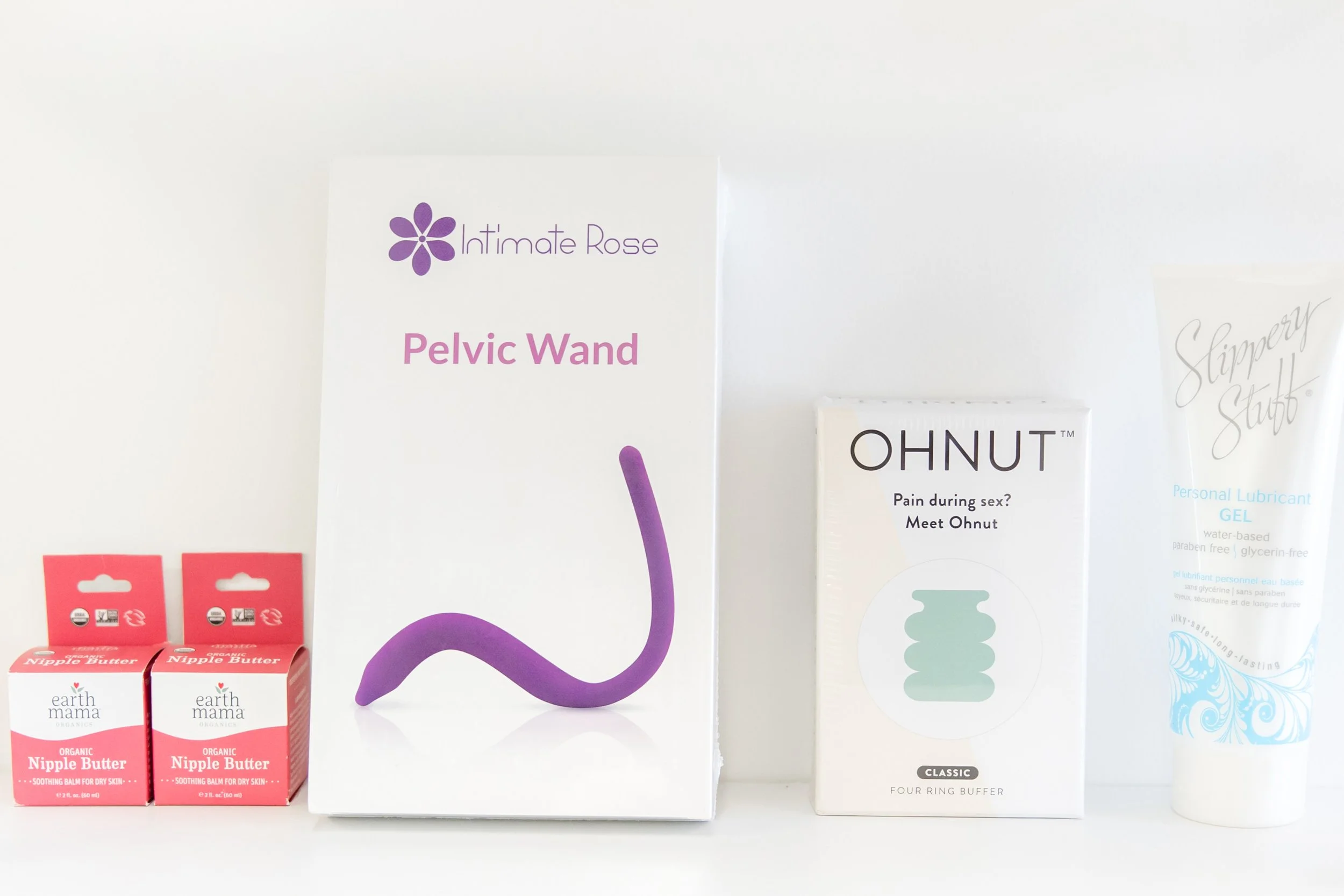
A few pelvic floor therapy tools to support pelvic pain at Root To Rise in Scarborough, Maine.
If you've been in for a pelvic floor evaluation, you may have heard your therapist mention pelvic wands or vaginal dilators as part of your home program. These two tools get grouped together a lot, and while they're both incredibly useful, they're designed to do different jobs. We wanted to break down what each one is for, how they differ, and why working with a pelvic health physical or occupational therapist matters.
Pelvic wands and dilators are often introduced when someone is experiencing symptoms related to pelvic floor muscle tension. That can look like:
Pain with penetration
General pelvic pain
Incontinence related to pelvic tension
Difficulty fully emptying the bowels
Difficulty tolerating pelvic exams
Pelvic floor scar tissue tightness
If any of this sounds familiar, know that it's more common than most people realize, and these tools are just one piece of a much bigger toolbox we use to support you.
How a Pelvic Wand Can Help
A pelvic wand is designed for gentle release and massage of tight or tender pelvic floor muscles. Its curved, ergonomic shape makes it easier to reach muscles that sit internally, between the hips and the pubic bone or tailbone. These are areas that are challenging to access effectively with your hands alone.
With guidance from your pelvic floor therapist, a wand can be used at home to help decrease tension in these muscles between sessions. Think of it as an extension of the manual work we do together in the clinic, giving you a way to continue that release on your own.
How a Dilator Can Help
Dilators serve a different purpose. They're used to gradually and comfortably introduce pressure or stretch at the vaginal or opening. Because they come in a range of sizes, dilators allow you to progress at your own pace, building tolerance, comfort, and confidence with penetration or internal exams step by step, rather than all at once.
The Key Difference Between Dilators and Pelvic Wands
In short: a wand works on releasing muscle tension, while a dilator works on building tolerance to stretch and pressure over time. Depending on your symptoms and goals, your provider may recommend one, the other, or both as part of your plan.
Gentle and Gradual, Always
With either tool, the goal is never to "push through" pain. Progress should feel gentle, gradual, and comfortable. If something feels sharp, forceful, or like you're gritting your teeth to get through it, that's a sign to pause and reassess, not push harder.
This is exactly why we recommend using these tools under the guidance of a pelvic health physical or occupational therapist. A trained provider can help make sure you're using the right tool, in the right way, at the right pace for your body and that it's woven into a broader, holistic treatment plan rather than used in isolation.
If you have questions about whether a wand or dilator might be right for you, we're always happy to talk it through at your next visit.
If you're looking for support in managing pain with intercourse,pelvic pain, incontinence, or postpartum recovery, our team at Root To Rise Physical Therapy & Pelvic Health in Scarborough, Maine is here to help.