
Male Pelvic Health: Finding Pelvic Floor Physical Therapy
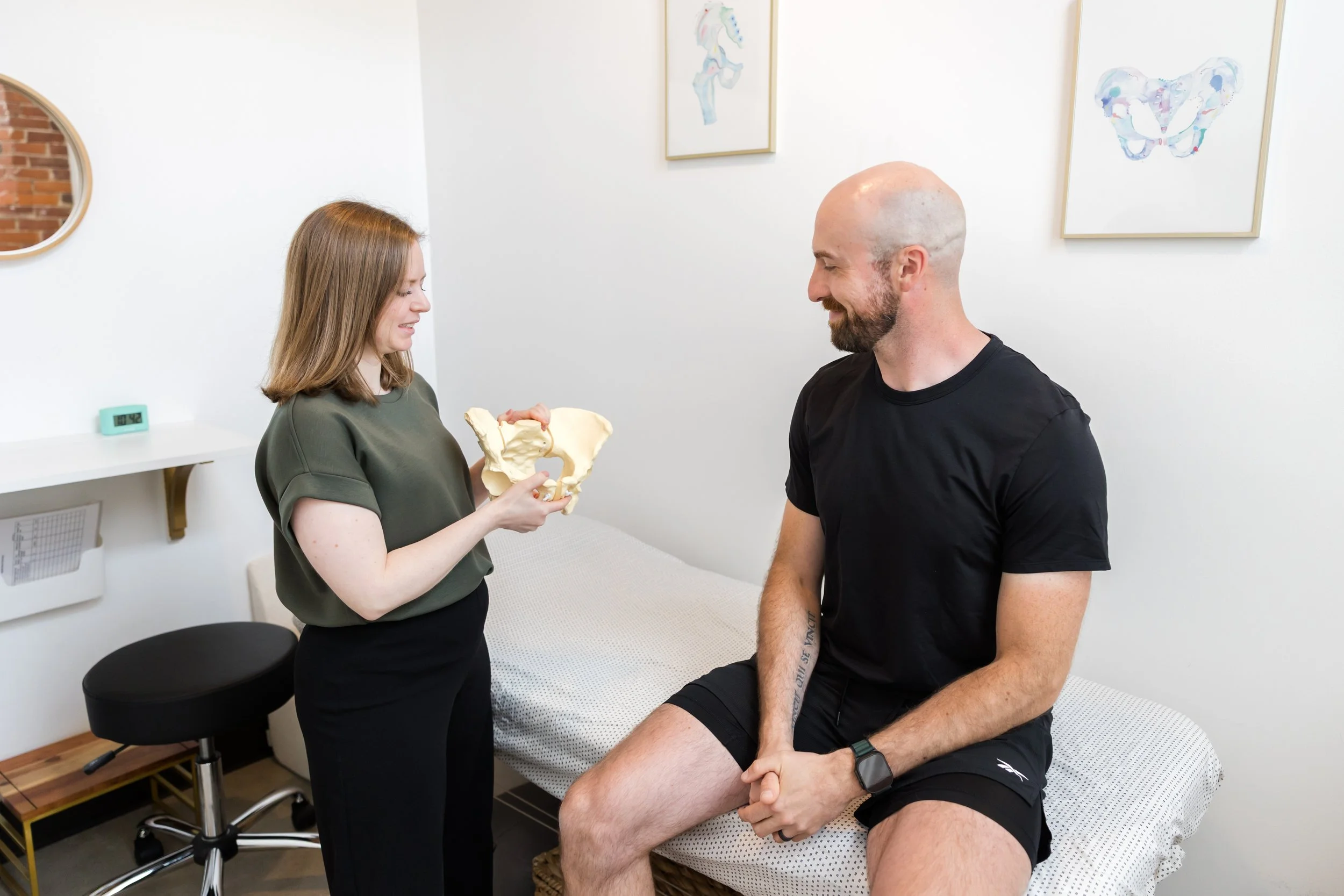
Dr. Daisy Doherty, Pelvic floor PT, educating a patient about the pelvic floor at Root To Rise Physical Therapy & Pelvic Health in Scarborough, Maine.
The idea that pelvic floor therapy is only for women is a common misconception. Unfortunately, this myth can also lead to a lag time in many individuals, including men, accessing the right care. In fact, many men with pelvic floor dysfunction seek support from several different providers before considering pelvic floor therapy. It is normally after they have done significant independent research that they walk through our clinic doors. This blog post will highlight how pelvic floor therapy can support certain male pelvic health conditions and some considerations to support faster direction to care.
What is the pelvic floor?
The pelvic floor is the muscular underside of the pelvis. Composed of different muscular layers, the pelvic floor provides affects sphincter control and plays both a stability and support role for the spine, trunk and the body as a whole. This is why back or hip pain may not be completely resolved until the pelvic floor muscles are addressed and also explains how the pelvic floor contributes to urinary, bowel, and sexual health.
What does pelvic floor physical therapy treat?
Pelvic floor physical therapy addresses muscle dysfunction. This includes considering postural and mechanical inefficiencies, increased muscle tension that affects optimal muscle performance, and muscle strength and coordination deficits. Common reasons to seek pelvic floor therapy include:
Hip or low back pain
Tailbone pain
Urinary urgency or frequency
Urinary or fecal leakage
Difficulty starting or maintaining urination
Difficulty achieving or maintaining an erection
Pain during or after intercourse or climax
Constipation or painful bowel movements
Pre or post-surgical care (prostatectomy, hernia repair, etc)
Why is it hard for men to find pelvic floor physical therapy?
Identifying pelvic floor dysfunction can be challenging because providers may not be thinking of screening for muscle dysfunction. This can be particularly common when men are seeking care and symptoms are not related to pregnancy and postpartum. Additionally, the urinary, bowel, and sex-related symptoms that are related to muscle dysfunction may also sound medical in origin. It can take a while to rule out medical considerations and come to the conclusion that the pelvic floor muscles are involved.
What are some steps to lead you to pelvic floor physical therapy?
Because pelvic floor related symptoms can present similarly to medical conditions, it’s important to rule this out with a medical provider. The good news is that if your symptoms are not responding to medical treatment, there is a higher likelihood that the cause is muscular. Here are some guiding questions that can help when discussing symptoms with a medical provider to consider pelvic floor involvement:
When did your symptoms start? Did you notice a correlation of your symptoms starting with some sort of physical activity, such as with exercise, sex, or around a muscle strain?
Do you find your symptoms improve or worsen with movement?
Do you find that stretching helps?
Did your symptoms improve if your provider prescribed antibiotics?
How can pelvic floor physical therapy help?
A pelvic floor therapist can support you by providing a musculoskeletal assessment and identifying any muscular contributions to your symptoms. Subsequent sessions may include:
Education around and awareness of the pelvic floor to improve its function and related symptoms
Breathing and relaxation strategies to reduce muscle tension
Gentle manual therapy to release tight or restricted tissues
Exercises and stretches to manage symptoms when they come up and improve them long term
Analysis of daily movement patterns and work ergonomics to prevent symptoms with daily activity
Review of workout routines to improve form and mechanics to optimize recovery
You don’t have to manage your symptoms alone. If you’ve been struggling with pain, urgency, frequency, or leakage, pelvic floor physical therapy can offer the clarity and tools you’ve been looking for.
At Root to Rise, with offices in Scarborough and Bath, Maine, we specialize in helping people find confidence and comfort in their daily lives again - without shame or stress.